
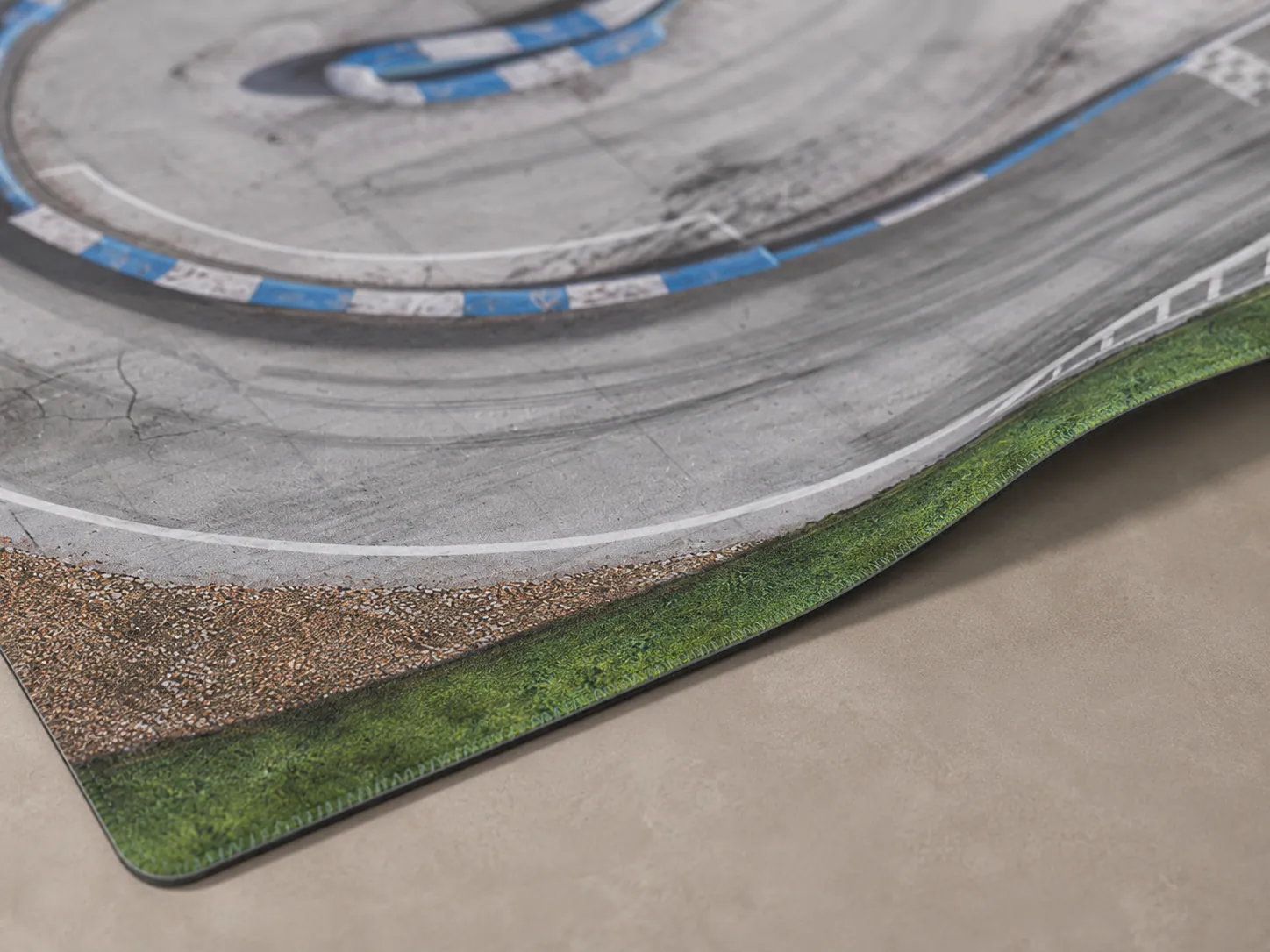
RC drift car — and the floor it works on.
An RC drift car is only half the story. Only scale, chassis and surface together give you clean, controlled drifting. Here's what actually matters — and which combination fits your space.
What sets an RC drift car apart from an RC car.
A remote-controlled drift car isn't a slower racing car — it's a different concept: it's meant to deliberately lose rear traction while staying controllable. Four things decide how well that works.
Most RC drift cars only drive the rear axle — that gives you the typical control over throttle and countersteering. All-wheel-drive drift setups exist too; they behave differently and forgive more, but are less common. We're brand-open: chassis like RhinoRacing RTS, Atomic, TG Racing, ARKEDGE or HPI Stage-D24 are common examples.
Drift chassis usually have a much larger steering angle than racing cars. The more lock you have, the easier it is to catch a drift again.
Hard plastic or hard-rubber rings are common. How far the rear breaks loose is always decided by the combination of tyres, car weight and surface — there's no one-size-fits-all setting for every setup.
Tiles, laminate and carpet only work by chance. A PVC drift track gives you a consistent surface with defined slip behaviour — and looks like a real race track while doing it.
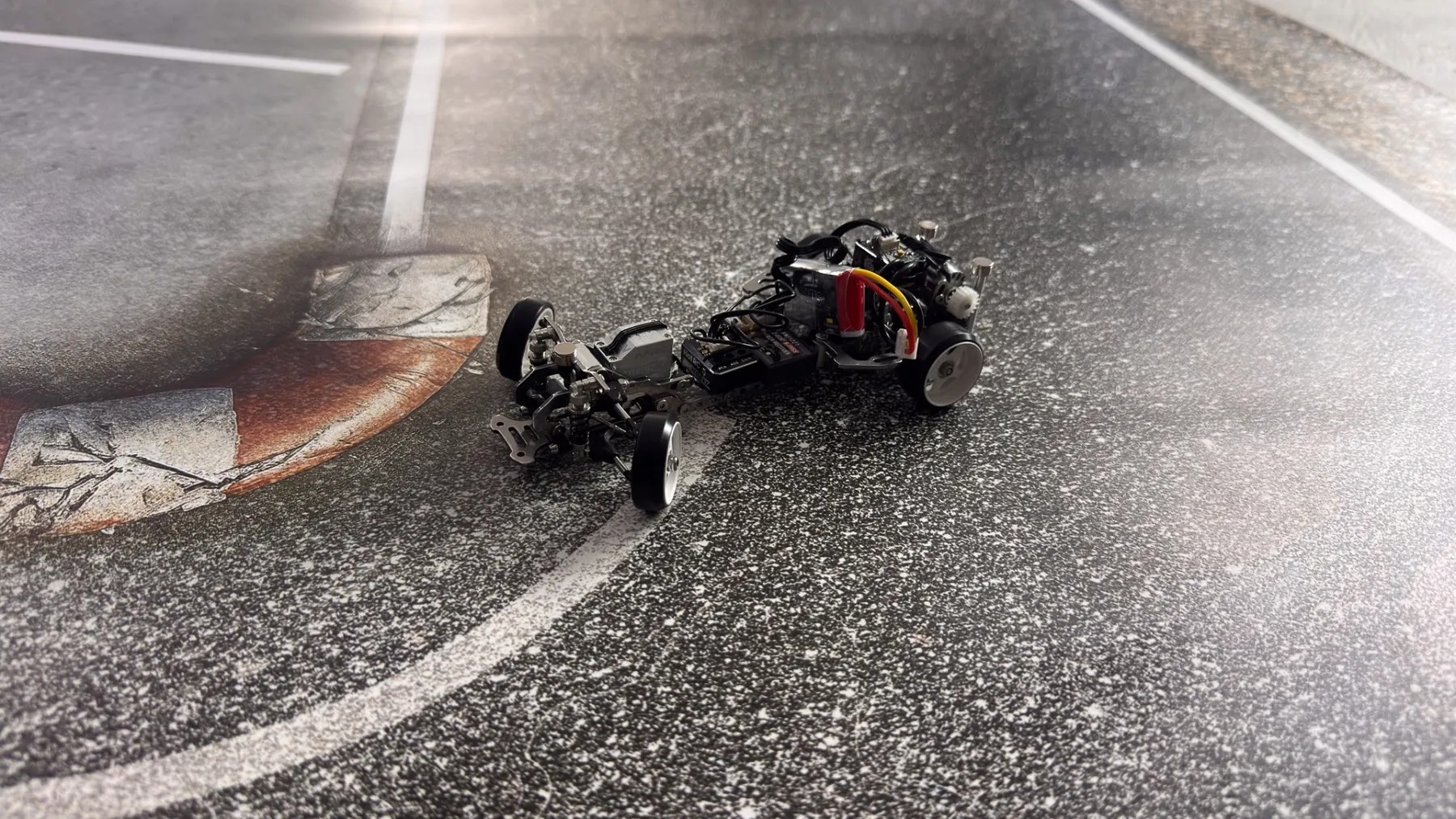
Your space decides the scale.
Almost every RC drift car mis-buy happens here: the car is great, but the area is too small for the turning circle. We support these three scales with matching tracks.
Big enough for a visible drift angle, countersteering and real weight transfer — small enough for a living room, hobby room or garage. Brand-open — examples: RhinoRacing RTS, Atomic, TG Racing, ARKEDGE, HPI Stage-D24.
Kyosho Mini-Z and comparable chassis can usually be driven on the same layouts as 1:24 — the smaller car simply has more room; tyres and setup still matter. Ideal when space is tight.
The Sturmkind DR!FT-Racer drifts with app control and needs the least space. We've built dedicated 1:43 layouts for it, with matching radii and curbs.
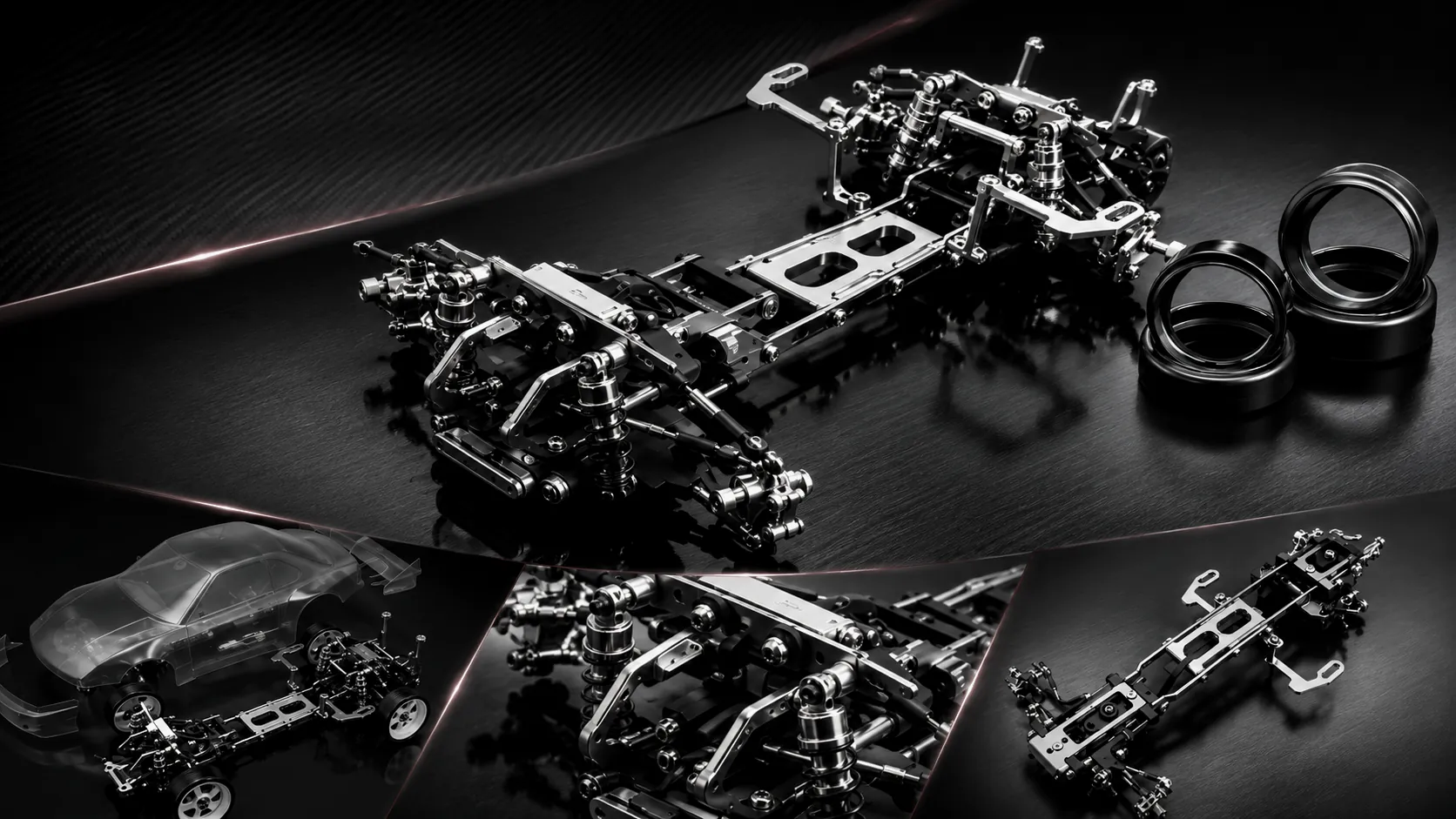
Your RC drift car, our track.
We don't sell cars — we build drift tracks and matching track accessories. That's exactly why so much work goes into every layout's flow, radii and surface. Your RWD chassis rolls straight onto it, whatever the brand.
- 1:24: brand-open — examples RhinoRacing RTS, Atomic, TG Racing, ARKEDGE, HPI Stage-D24 (no partnership, no guarantee for every model of a brand)
- 1:28: Atomic DRZ and Kyosho Mini-Z can usually use the same 1:24 layouts
- 1:43: layouts tuned exactly to the Sturmkind DR!FT-Racer
- You set the grip yourself — with Track Reload spray from our accessories
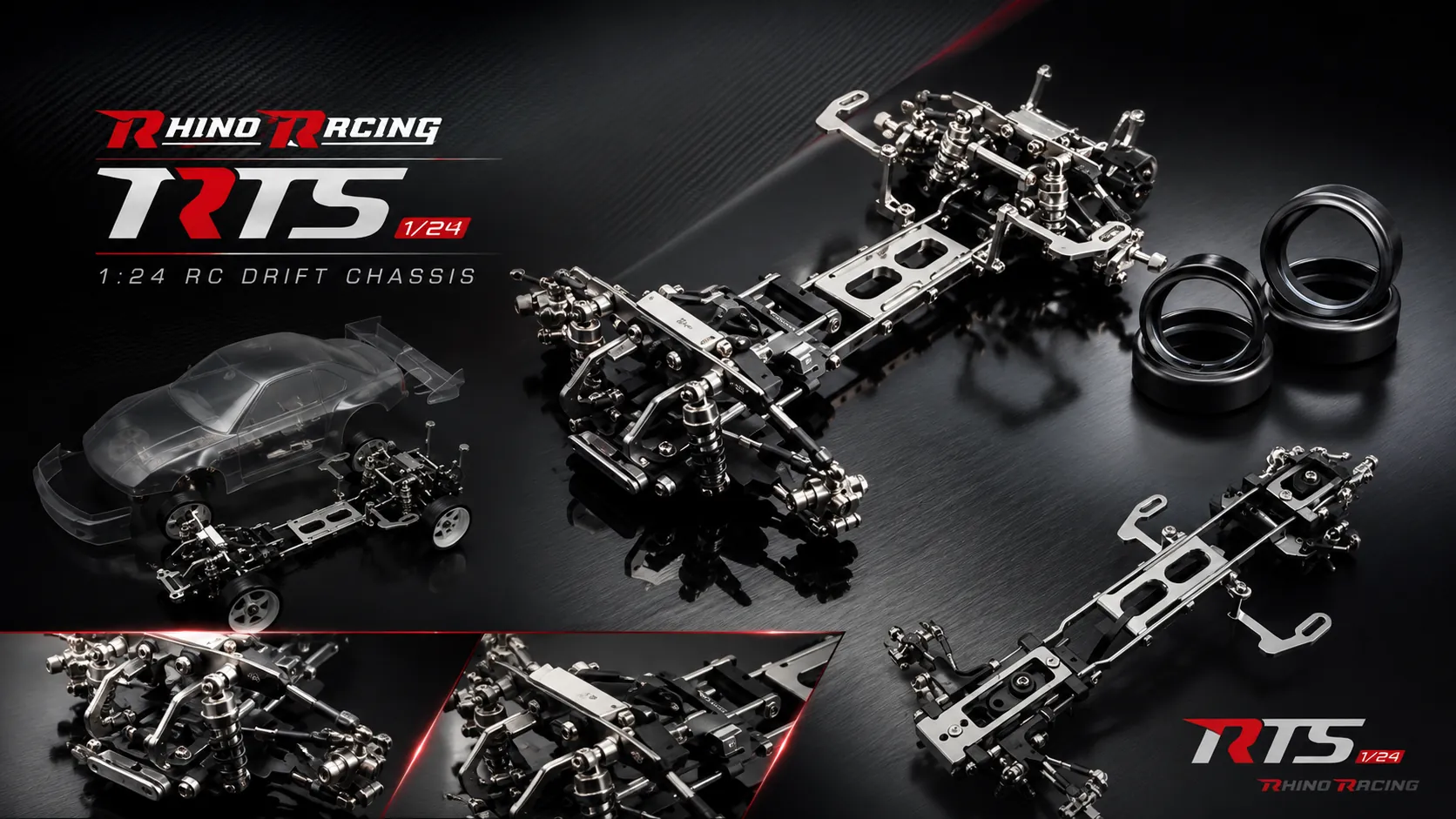
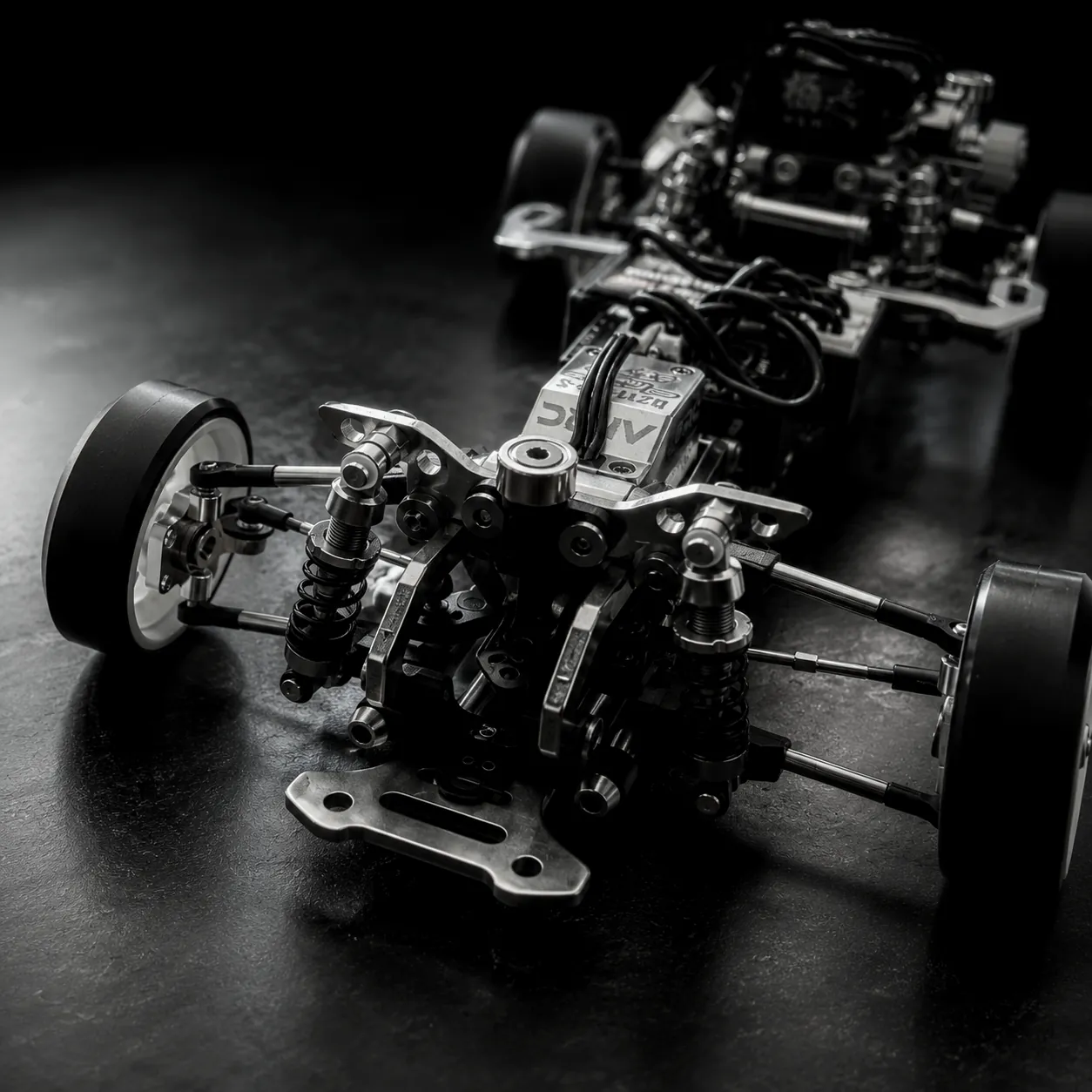
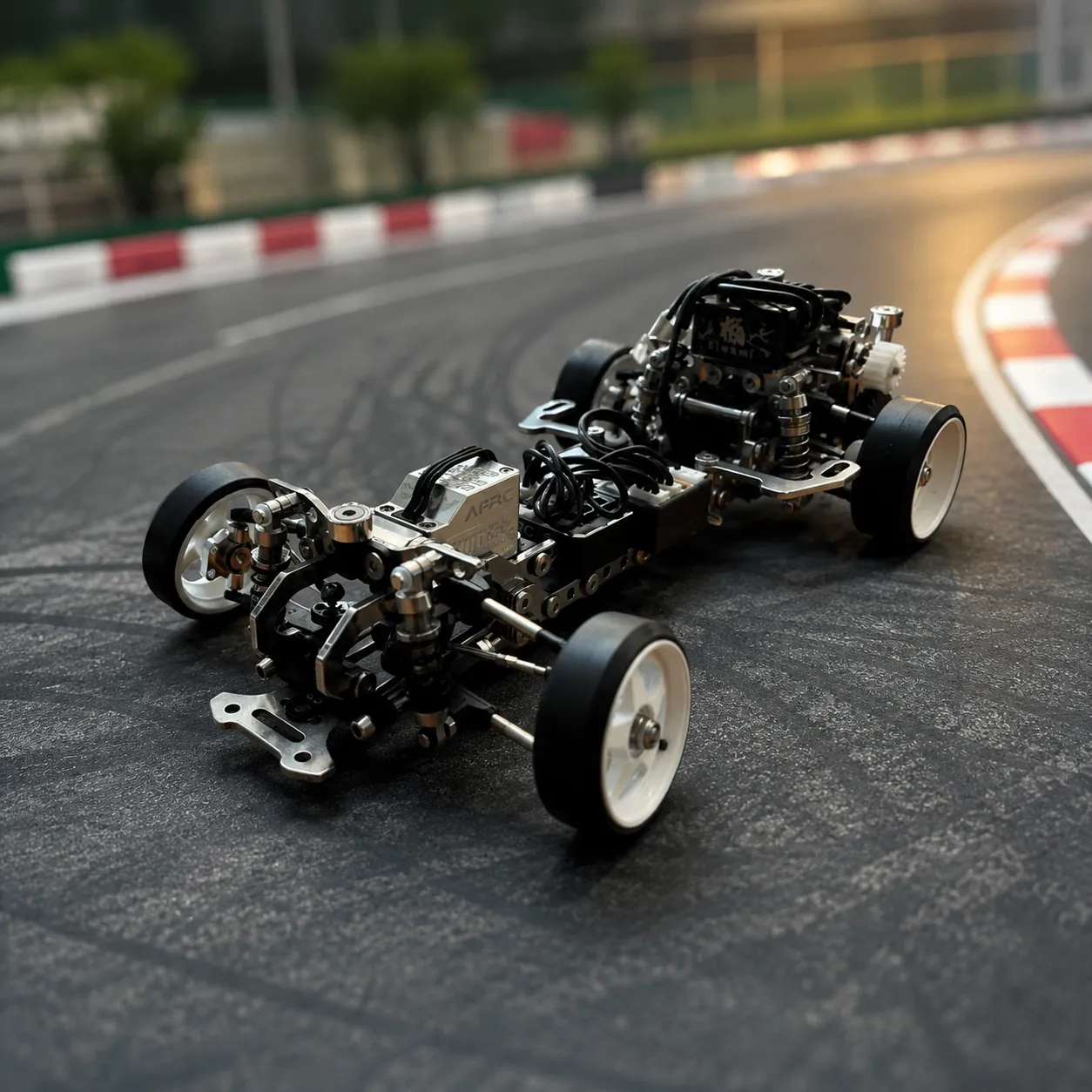
What you see on a drift chassis.
Two example cars from the 1:24 scene. They show what matters in the build: drive only on the rear axle, plenty of front steering lock, and a body you can swap independently of the chassis. Both are manufacturer images — we don't sell vehicles.
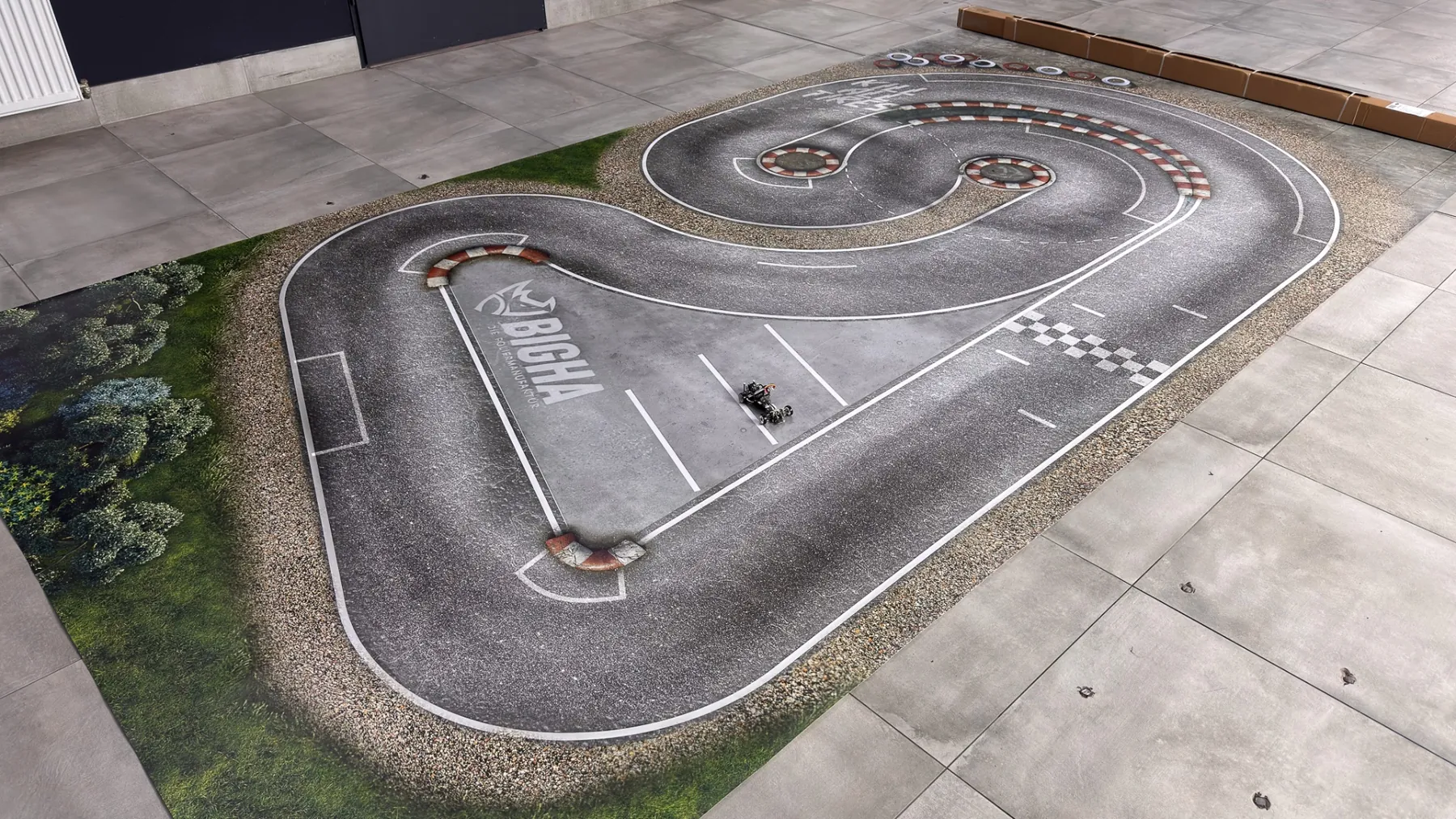
No clean drift without a defined surface.
Our tracks are printed PVC mats with a drift-optimised layout: matching radii, curbs, start line and run-off zones. You roll them out, drive — then roll them back up. You set the slip behaviour yourself with our Track Reload spray; the mats are deliberately left untreated.
Creases after the first unroll are normal: the mat needs a bit of time to lie completely flat. Warm steam, e.g. from a steam cleaner or an iron with steam, speeds that up significantly.
Frequently asked questions about RC drift cars.
What is an RC drift car?
A remote-controlled car built for controlled sideways driving — usually with rear-wheel drive, a lot of steering lock and hard drift tyres. The driver holds the drift through throttle, steering and weight transfer. How well it works depends on the interplay of car, tyres and surface.
Which scale is right for me?
It's almost entirely down to your available space. 1:24 is the most popular scale and needs at least about 250 × 150 cm. 1:27/1:28 (e.g. Kyosho Mini-Z) can usually use the same layouts with more headroom. The Sturmkind DR!FT-Racer in 1:43 gets by with around 300 × 190 cm.
Can I run an RC drift car on tiles or laminate?
In principle yes, but the result is unpredictable: dust, joints and polish constantly change the grip. A PVC drift track gives you a consistent surface, a defined layout with curbs and a start line — and you can simply roll it back up after the session.
How do I adjust the slip behaviour?
Our tracks are optimised for drift by their layout, but not pre-treated. You set the desired slip behaviour yourself with our Track Reload spray and can refresh it at any time. That way you control the grip instead of just accepting it.
Do you also sell the car, not just the track?
No — we focus 100% on drift tracks and matching track accessories. You bring your own car: our 1:24 layouts are brand-open (examples: RhinoRacing RTS, Atomic, TG Racing, ARKEDGE, HPI Stage-D24), 1:28 chassis run on them too, and for 1:43 we design around the Sturmkind DR!FT-Racer. Carrera HYBRID is sold by the manufacturer in 1:50 scale — for that we create layouts in the Designer.
How much space do I actually need?
Add around 30 cm of run-off per side to the pure track area. That way an over-cooked drift doesn't end straight at the wall. The space finder on the homepage shows you which track fits your area.
What do I need to get started overall?
Three things: an RWD drift chassis, an area with a defined surface — i.e. a drift track — and patience for the setup. Barriers, curbs and markers come afterwards; they turn the area into a real track.
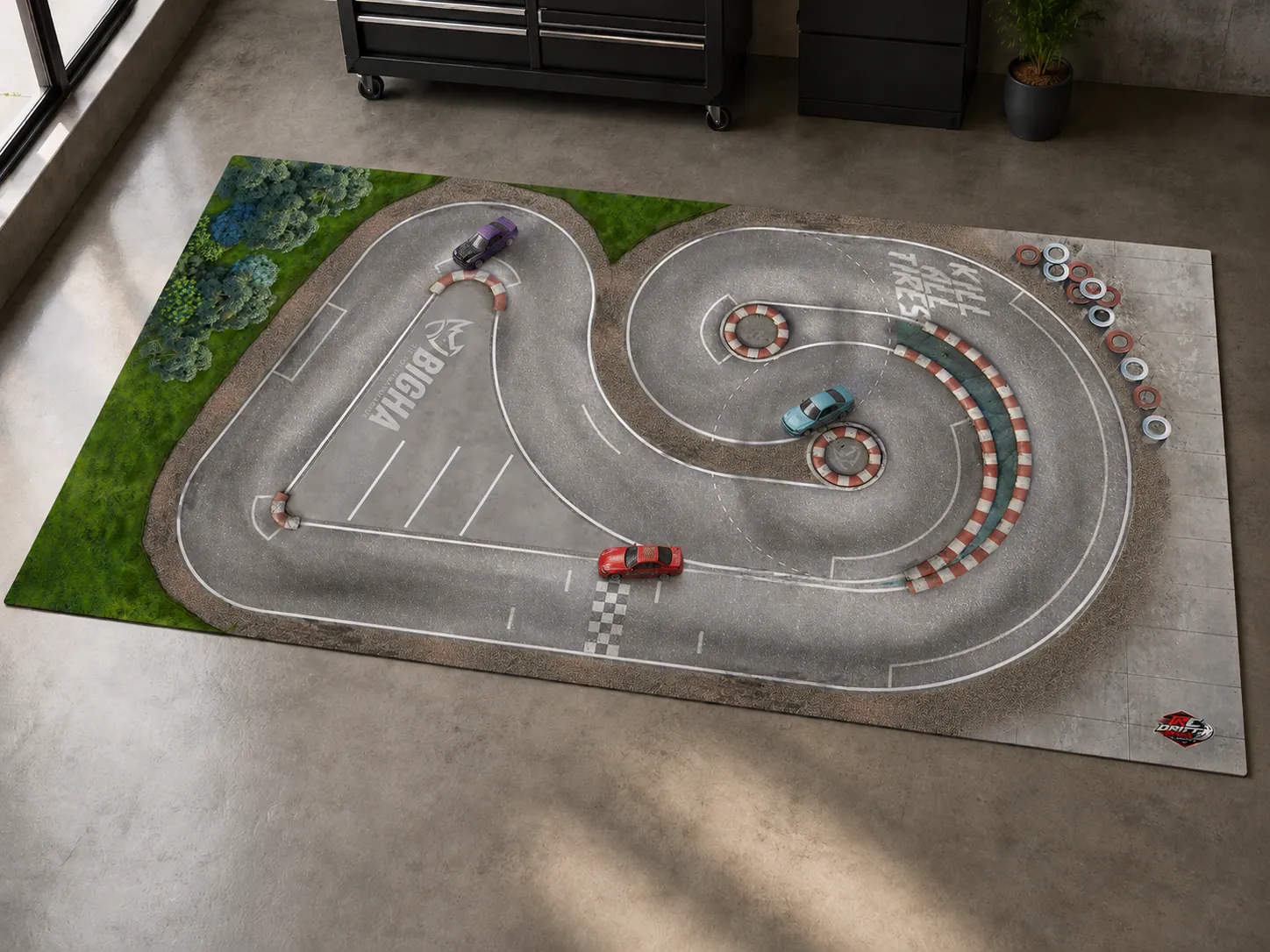
The right track for your car.
Shipping to Germany and to the countries listed on /shipping, with tracking via GLS/DPD. Custom sizes can be requested directly in any buy box.